Saturday, 31 October 2009

Transmision #22 From Tycho (Samhain)


"Just before the death of flowers,

And before they are buried in the snow,

There comes a festival season,

When nature is all aglow."

Unknown


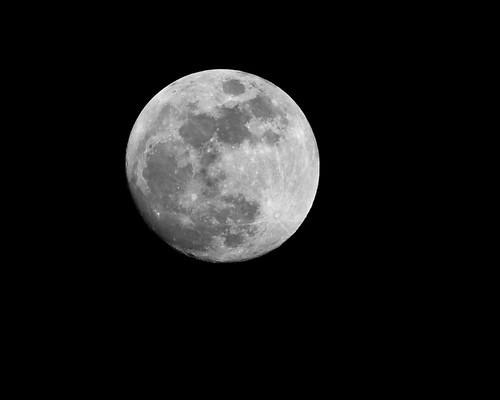
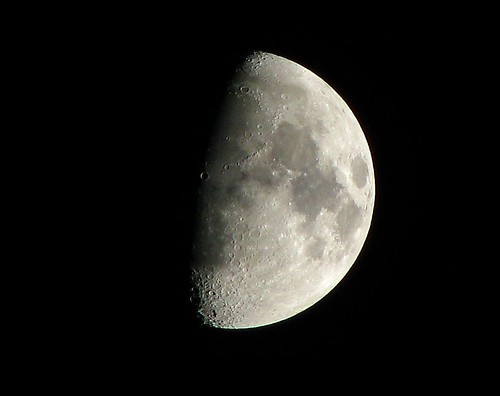
Phase of the Moon Today: Waxing Gibbous 99% of Full - Almost a full moon - many people think it is a full moon
Samhain - roughly translated summer's end - a harvest festival held on October 31 - November 1 to mark the end of the harvest. It ends the 'lighter half' of the season and ushers in the 'darker half'. There is a realtionship to the festival of the dead because many people see nature dying around them.
As the picture suggests, bonfires play a major role in this festival. Farmers would walk with their livestock between two bonfires as a cleansing ritual. It was a gaelic holiday and the Gaels believed that the border between this world and the 'otherworld' became thin on this day. The custom of wearing costumes was an attempt to copy the spirits and placate them. Today we call this Halloween - another commercialized holiday that has lost its meaning.
What does this have to do with the Moon - not much but it sure is scarier on a full moon (or close to full moon)
signing off
kb...

Friday, 30 October 2009

Transmission #21 From Tycho (Misconception revealed)

"Errors, like straws, upon the surface flow; He who would search or pearls must dive below." - John Dryden

Phase of the Moon Today: Waxing Gibbous 97% of Full - cloudy tonight couldn't see the Moon

I completed the impact crater activity in my Science 10 class today. I related it to the kinetic energy topic we have been dealing with in class. I showed my class the impact crater Powerpoint we received in this course. The students were interested in the topic and had many questions about the Moon.

One student posed this question "Since the Moon has no atmosphere, if you walked around the Moon would you fall off?"

Shockingly an interesting correlation - does the atmosphere have any relationship to gravity? Well of course not - I was a little puzzled that they had made this connection especially being a Sr. high student. It just goes to show that it really doesn't matter how old you are many people still have many misconceptions about science and how things work. i guess that's why I signed up for this 'teaching' gig to bust the myths and misconceptions.
signing off
kb

Sunday, 25 October 2009

Transmission #19 from Tycho (Crater Formation)

"How's bout them holes in the moon.
When it orbits low, we can reach up to
harvest the cheese, and retrieve,
all our things back from them holes."

by That 1 Guy
Phase of the Moon Today: Waxing Gibbous 60% of Full. I saw the Moon again today as well as yesterday.
Impact craters can be divided into two categories: simple and complex. The formation of these craters is characterized by three distinct stages that include contact and compression, excavation and modification. The first stage is when the projectile makes contact with the ground surface to about half its diameter. The kinetic energy of this projectile is transferred to the surface and converted into shockwaves radiating outward into the planetary body. The projectile becomes compressed and some of the shockwaves make their way to the rear of the projectile. Once this happens it will be reflected as a rarefaction transforming the projectile into melt and vapour. The vapourized portion may expand out of the crater and the melt may be mixed into the breccias below.
The second stage, excavation, is characterized by the impact crater opening up. As some of the shockwaves travel upward their energy is converted into kinetic energy. This kinetic energy exceeds the mechanical strength of the target rocks and ejects fragments into the atmosphere. The movements of these rocks create a bowl-shaped depression called a transient crater. The area under the impact site has material that continues to be driven downward and outward.
The final stage is the modification stage. This stage begins when the transient crater has grown to its maximum size and the shockwaves no longer play a role in crater formation. The crater is modified by gravitational forces and rock mechanics. Once all of the remaining material falls and stops the stage is complete.

Complex crater formation follows the same stages as the simple crater but with some noted differences. This includes the uplift that occurs at the end of the excavation stage to begin the modification stage. This is characterized by the deep seated rocks beneath the center of the transient crater forming a central uplift. This process is accompanied by the peripheral material collapsing and draping the original uplifted rocks. As the modification stage ends a central uplift is present and surrounded by a terraced rim.
signing off
kb

Friday, 23 October 2009

Transmission #18 from Tycho (Common Heritage of Humankind)

"God himself says 'speaking through the voice of nature' inasmuch as it is not His will to have Nature supply every place with all the necessaries of life, He ordains that some nations excel in one art and others in another. ... So by the decree of divine justice it was brought about that one people should supply the needs of another.
Those therefore who deny this law, destroy this most praiseworthy bond of human fellowship, remove the opportunities for doing mutual service, in a word do violence to Nature herself. For do not the oceans, navigable in every direction, with which God has encompassed all the earth, and the regular and the occasional winds which blow now from one quarter and now from another offer sufficient proof that Nature has given to all peoples a right of access to all other peoples." - Hugo Grotius

Phase of the Moon Today: Waxing Crescent 40% of Full - the clouds are back in town

The quote above comes from the book Mare Liberum by Hugo Grotius a 17th century legal scholar. He was the first person I know of that described the Common Heritage principle to the Sea and I think it can be related now to the Moon. The Moon Treaty created in 1979 "is an international treaty that turns jurisdiction of all heavenly bodies (including the orbits around such bodies) over to the international community." This Common Heritage of Humankind has been discussed lately in our class discussions and one piece of this 'legislation' that caught my attention was that a small number of countries have signed and ratified this treaty. Therefore it really is a failure of international law and another failure of the UN since those countries that have not signed it do not abide by it.
Another piece of interest that stood out was that it "bans altering the environment of celestial bodies and requires that states must take measures to prevent accidental contamination." After the LCROSS impact mission blatantly violates this article I ask the question, is anyone bothered by this impact? What gives us the right to do this to the Moon? Should we have an international protection agency for the Moon? Lunar Protectors?
..I think so...
signing off...
kb

Thursday, 22 October 2009

Transmission #17 from Tycho (Impacts)


On impacts
"the most fundamental process on the terrestial planet" - Eugene and Carolyn Shoemaker

Phase of the Moon Today: 7:00pm Hip hip hooray, it is a beautiful night and I see the moon perfectly outside my balcony looks like a Waxing Crescent.


The more I learn and read about the Moon the more I appreciate it. I researched crater formation today and looked at why this process is important. Impact craters allow us to investigate the history of the planetary surface. It can be used as a clock for estimating ages of the surface, ie the more impacts the older the surface. It can provide information on the physical properties of near-surface rocks without having to retrieve samples. They can also be used as marker fossils as evidence/clues to other previous geological processes such as erosion, sedimentation or lava flooding.

There are two main types of crater formed on the lunar surface: Simple craters and Complex craters. The simple craters are characterised by a bowl-shaped depression on the planetary surface and is caused by a smaller projectile. As the projectile hits the surface geologic material is ejected into the air as the compression wave moves through the mantle. The ejecta is essentially excavated from the surface and falls back to the ground blanketing the surface in debris. The impact causes the bedrock to become fractured and the layer above to either melt or form breccia leaving behind a crater.

The complex crater results from greatrer impact energy due to a larger projectile. The rock debris crushed in the compression stage beneath a crater moves like a viscous fluid. This occurs due to the strong impact pressure wave passing through it. This 'fluidized' region allows the walls to fow or collapse inward toward the center of the cavity. The moving material converges in the midle and pushes the rocks up forming the central peak.

Pretty interesting stuff...

kb

Wednesday, 21 October 2009

Transmision #16 From Tycho (Lunar Prospector Magnetometer)


“Magnetism is one of the Six Fundamental Forces of the Universe, with the other five being Gravity, Duct Tape, Whining, Remote Control, and The Force That Pulls Dogs Toward The Groins Of Strangers.” - Dave Barry


Phase of the Moon Today: Waxing Crescent 23% of Full


This post discusses the Magnetometer Data from the Lunar Prospector mission. The mission was designed to measure the magnetic field surrounding the spacecraft as it orbited the Moon. It was positioned to detect disturbances in Earth's magnetic field due to the presence of the Moon. The data collected was to allow scientists to estimate the induced field generated in the Moon. They determined the amplitude of the field to be -2.4 x 10^22 Gauss-cm^3. This suggests that the lunar core represents only 1-3% of the Moon's total mass. This measurement helps support the giant impact hypothesis since if the Earth and Moon were formed together form the same material (i.e. co-accretion model) then the proportion of the cores should be the same - which they are not-Earth's 33%, Moon 1-3%.

My initial reaction to this article was that this would be an interesting article to discuss with my Physics 30 class. I am also trying to work on an exam question related to the induction of the Moon or the induced voltage that would be generated in the spacecraft's boom. According to Lenz's law the magnetic field on Earth should generate a voltage according to the equation V = lvB where V = voltage, l - length of boom (m), v - speed of boom (spacecraft) in field (m/s) and B = magnetic field strength of Earth. When I get it done I'll post it here.

signing off

kb